
Area of Expertise
Our Area of Expertise
As a consulting firm the experiences of SCARF are wide and vast. The project executed by SCARF covers a large number of sectors/fields of national importance such as Agricultural & Rural Development, Fisheries & Livestock, Water Resources, Water Supply & Sanitation, Health & Family Planning, Education, Technical, Overseas Training & Study Tour, Public Sector Reform & Governance, Science & Technology, Gender Development, Land, Housing, Urban Development, Environment, Road, Transport, Port & Waterways, Power & Energy, Telecom, Financial Institutions & Industries, Labor & Employment, NGOs, & Private Sector and others.
Expertise of SCARF is extensive and multi-sector in nature. Brief of the SCARF expertise has been outlined in the following paragraphs in alphabetic order.

Agricultural Research and Extension
Agricultural and Rural Development Sector
A large majority of people in the developing countries depends on agriculture for their livelihood. Many of these countries are characterized by over-population, limited resource base, and fragile ecosystems. Poverty, in many of these countries is wide-spread and often endemic, unemployment is rampant, food shortages are frequent, development performance is generally unsatisfactory, and the sustainability of the development effort is doubtful.

The United Nations and other international agencies have long been working to promote agricultural development as an essential part of improving the living standards of people in the rural areas, seeking to provide relief to victims of malnutrition, while at the same time attempting to promote regional and national development.
To achieve these goals, efficient management of water resources along with the introduction of new high-yielding varieties, vocational and technical training, strengthening of support services, and crop intensification programs are regarded as essential steps in raising agricultural production and productivity.
In this sector, SCARF has been intensively involved in activities such as agricultural research and training, irrigation and drainage systems, crop intensification and diversification, food processing, integrated farming, land use planning, soil classification, farmland conservation, watershed management, rural credit, rural development, and training. It has placed special emphasis on directing its consulting experts to keep abreast of the newest techniques and developments in the related areas.
SCARF provides services for: project identification & formulation, socioeconomic and technology-related research, feasibility study, bench-mark survey, economic and financial analyses, agro-socio-economic studies, study on resource management, formulation of development policy, project evaluation, monitoring and management, manpower training, financial management, and organizational set-up and system management.

Fisheries and Livestock
Water Resources Management
The rapid economic growth in industrialized and agricultural areas has brought to light an increasing number of shortages in the earth’s natural resources. Among these, lack of water constitutes a critical shortage.
Shortages of water, felt most painfully in the world’s arid regions, but by no means limited to these areas alone, have been aggravated in recent years by ecological changes and increased consumption for human and industrial use.
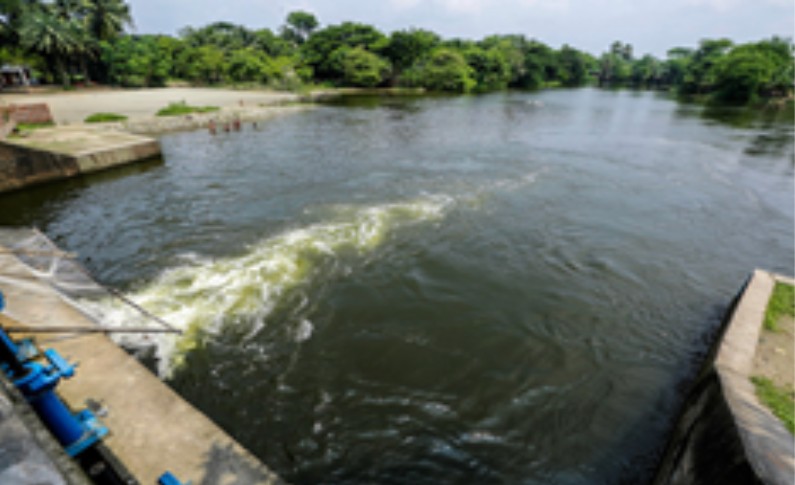
In response to the need for every society to have access to sufficient supplies of water, SCARF has made particular efforts to develop water resources through such projects as reservoirs, river improvement, groundwater development, and water sewage treatment. In general, groundwater would be capable of more rapid development than surface water, which would require the construction of dams, canals, and other large-scale civil works. As in most arid countries where surface water supplies are limited, groundwater must satisfy water requirements. In a number of African nations, nearly all water supplies originate in groundwater resources. To assist these clients, SCARF began, several years ago, to carry out specialized studies in groundwater development, applying its technical skills and experience to obtain clearer insights into many related problems.

Water Supply and Sanitation
Adequate and timely supply of potable water is important not only to enhance the quality of living, but for life itself. Studies, investigations and evaluations of water supply projects and alternative options are necessary for the consumption and management of efficient and effective supply systems. Additionally, demand assessment, analysis, supply services and their constraints, their economic evaluations and assessment of the effects on the environment are to be carried out in developing the water supply systems. Exploration and treatment of water to enable it to be used for its intended purposes may require reservoirs, pumping stations, treatment works, and distribution pipelines.
SCARF has experience in all aspects of water supply, distribution, and treatment, and, together with comprehensive backup services, can provide the requisite skills to produce cost-effective solutions.
Education

SCARF has had substantial involvement in all phases of educational projects from the initial stage of planning to preparation of educational materials and management and provision of post-project evaluation. It is also highly experienced in educational planning, professional training, curriculum development, program development, and evaluation. It has a wide interest in educational delivery systems, skill development through formal and non-formal channels, and educational need assessment. In the education and training sector, the typical assignments have included:
- Technical and management assistance to educational institutions at various levels (both formal and non-formal);
- Analysis of skilled manpower needs at the plant, regional or national level, policy advice and elaboration of educational programs to meet those needs;
- Project management and supervision of construction of educational buildings and facilities;
- Organization and coordination of fellowship training courses overseas and of specialized on-the-job training programs for all technical and management levels;
- Curriculum design and development of teaching materials for technical and industrial training;
- Specifications, procurement, and installation of educational equipment, laboratories, and pilot plants;
- Study and design of technical and vocational training institutes;
- Industrial training on-the-job and through specialized courses for new and existing industrial plants;
- Turnkey realization of colleges, training institutes, libraries, technical schools, research centers, and pilot plants;
- Feasibility studies for universities, polytechnic, and secondary technical schools;
- Planning and design of university buildings complexes, research facilities, and residential and other campus infrastructures.

Engineering and Infrastructure Development
SCARF is well regarded for carrying out large and complex projects on time and within budget. It is known, too, for successful small projects that call for skill and ingenuity. SCARF provides consultancy services in all phases for implementation of infrastructure development projects, such as, pre-feasibility and feasibility studies; all types of survey and planning; detailed architectural and structural design; preparation of bill of quantities, specifications, tender documents and form of contracts; evaluation of tenders; construction supervision and quality control; maintenance supervision; and post-evaluation. SCARF is mainly involved in construction technology; bridge engineering; industrial engineering; transportation (road, rail, waterway and aviation); architecture; geotechnical services; and energy. The design of technically sound, cost-effective and aesthetically pleasing structures has been an important component of many of the major projects, for which SCARF has provided consulting services. SCARF is in the forefront of computer-aided design and project management. Engineers use sophisticated programs to find the best design solutions. Designers use CAD to produce accurate drawings faster. SCARF’s interactive on-line computer systems for project control are recognized as the best in the industry.
Bridge Engineering


Forestry
Architecture


Geotechnical Services
Digital Land Survey
- Geodetic and Benchmark Survey
- Cadastral survey and land acquisition plan
- Topographical Survey
- Contour Survey
- Spot / Leveling Survey
- Hydrographical & BATHYMETRIC Survey
- Geotechnical Survey
- Engineering Route and Utility Survey
- Land use & Physical Survey
- Boundary Demarcation and layout Survey
As built survey - GPS (Global Positioning System) Survey
- Land Use and Physical Feature Survey for Master Plan


Survey and Land Valuation Report Preparation Using Digital Method:
- Land Surveys and Valuations
- Property Survey and Property Valuation
Environmental Services
SCARF has wide experience in providing technical services for environmental studies pertaining to assessment, social impact, and abatement planning. As a leading consulting group in natural resource management and planning, it is committed to resource conservation. It has lately been engaged in the areas of environmental protection and pollution abatement and has a special interest and capability in planning and developing environmentally efficient energy systems.

Labor and Employment
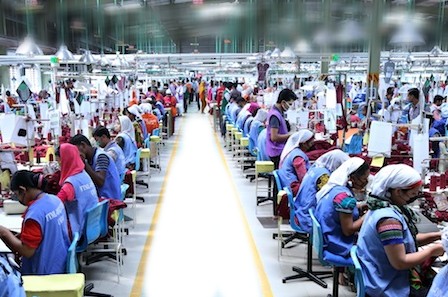
Employment generation is a primary objective of economic policy in a densely populated economy particularly in South Asian and South-East Asian regions. While agriculture continues to be the chief source of employment, non-farm activities are providing employment to an increasing proportion of the labor force. For example, in 1995, the labor force of Bangladesh was estimated at 61.7 million, 37% of which were unemployed or under-employed; and of those employed, about one-third were employed in non-formal sector activities. Non-formal employment has provided a partial solution to the rapid growth of the labor force faced with the lack of absorption capacity of the agricultural sector.
The limited industrial base will not be able to exercise the necessary demand pull from the formal sector. Scarcity of capacity, skills, and other resources in the non-formal sector will impede an adequate response to the demand pull.
Employment and income-generating activities to absorb surplus labor involving poor, women and other socially disadvantaged groups require support for motivation, promotion of awareness, selection of suitable economic activities, technology transfer, training for skill development, credit, and provision of inputs. The employment generation in small-scale manufacturing including handlooms, wholesale and retail trade, hotels and restaurants, services, and the household sector will be explored. SCARF’s experts are providing consultancy services in vocational education, skill development and training, and income generation activities in developing countries.
Regional Planning and Development

Sector Studies and Project Planning
Training and Overseas Fellowship/Placement Services
During the past years, SCARF, in association with a number of other companies and, in some cases, in collaboration with selected institutions and nongovernmental organizations, has executed scholarship and training programs in a number of fields in several countries. It also organized study visits and fellowships for officials implementing development programs at different levels. The services offered included identifying appropriate training institutions in the different regions, designing training packages by specialists having experience of working in both developed and developing countries, placement of the trainees, administration of training programs, and enhancing the role of the trainees in their respective countries.

The courses provided were of varying durations, ranging from study visits of 2-3 weeks for senior officials to diploma courses of 3-6 months for mid-level officials, and academic programs extending over 1-3 years leading to Masters and Ph.D. programs. A large number of trainees have so far been catered for in areas as diverse as agriculture, irrigation, environment, education, health care, forestry, fisheries, computer studies, engineering, industry, energy, management, and MIS.
Through its own training division and permanent core group, SCARF provides a comprehensive range of training services through on-the-job training of client’s staff; subject-specific workshops and seminars; short courses in the USA or overseas; and training programs at carefully selected institutions of higher learning and at SCARF headquarters.
SCARF has a complement of well-experienced in-house experts for developing the curricula, training materials, and coordination of training programs.
Mechanization and the introduction of improved practices in farming as well as in off-farm enterprises have, in recent years, brought about an ever-increasing demand for training of people employed in the rural sectors of developing countries. To cope with the requirement, training and extension services are strongly emphasized by SCARF when providing services related to rural development.